Cape Coral Tile Roof Soft Wash: A Spring 2026 Restoration Case Study
A recent Cape Coral tile roof soft wash that lifted years of black streaks and Gloeocapsa magma without a single high-pressure pass. Process, products, and visible results documented.
By The Cape Coral Pressure Washing Team · Pressure Washing Operators
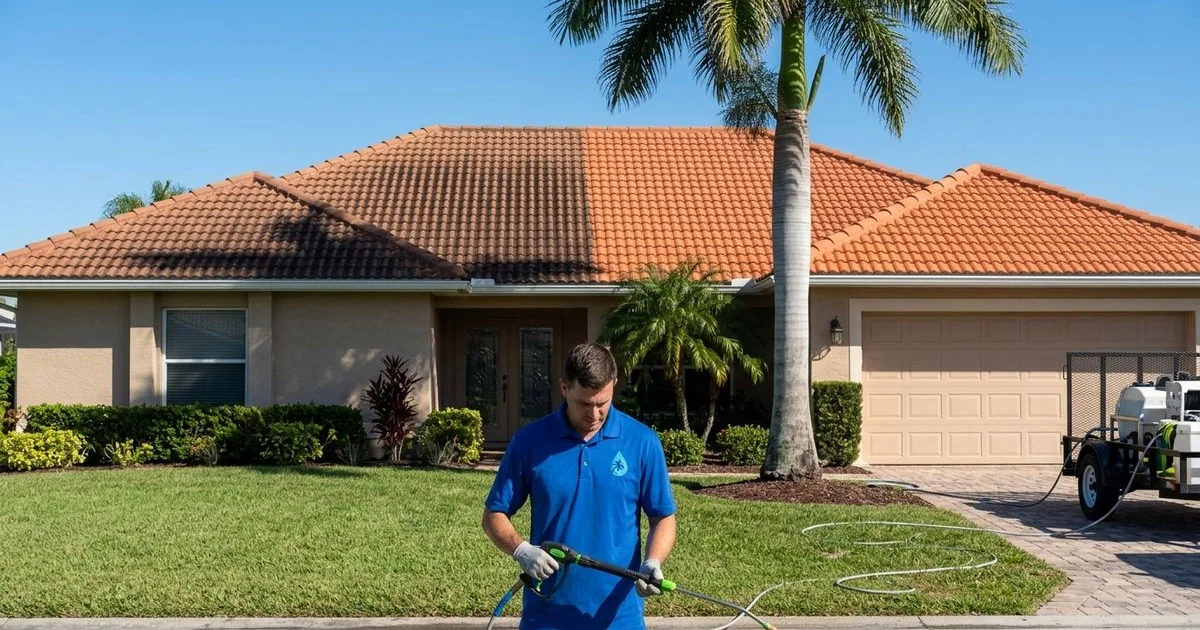
Every few weeks a homeowner calls us about a roof that looks “ten years older than it is.” Black vertical streaks down one slope, a dull grey film on the rest, and the gutter line stained where rain has pulled the bacteria down. The instinct is to crank up a pressure washer and blast it clean. That instinct will cost you a roof.
This is a write-up of one such job we completed in early spring 2026 on a tile roof in Cape Coral - what was actually on the tiles, what we used to remove it, and what the same roof looked like 48 hours after we packed up. No before/after fluff, no invented testimonials. Just the project log.
What was actually growing on the roof
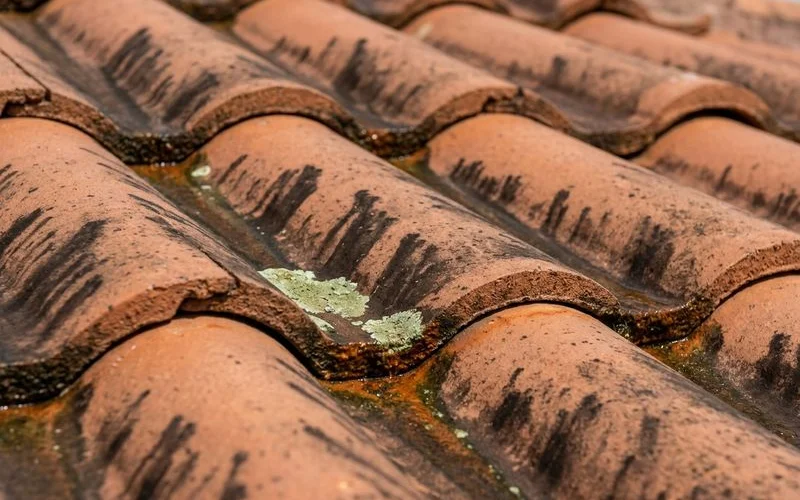
The “black streaks” most Cape Coral homeowners assume are dirt are almost never dirt. On a tile roof in our humidity, they’re a cyanobacterium called Gloeocapsa magma - the same organism we walk through in detail in our guide to roof black streaks. It feeds on the limestone filler in shingles and the porous surface of clay/concrete tile, holds moisture against the substrate, and stains permanently if it’s left to mineralise.
By the time the homeowner called us, the streaks had been visible for at least three rainy seasons. Light algae was also growing in the valleys where shade and runoff combine. None of it was structural damage yet - but it was the stage right before tiles start spalling and the underlayment starts pulling moisture.
Why never pressure wash a tile roof
Direct high-pressure spray on barrel or flat tile shatters the surface glaze, drives water under the laps, and voids most tile warranties. The Asphalt Roofing Manufacturers Association (ARMA) and every major tile manufacturer specify a low-pressure cleaning method - what the industry calls soft washing.
The soft wash method we used (and why we use the same one every time)
Soft washing is not “pressure washing on a lower setting.” It’s a fundamentally different process: chemistry does the cleaning, and the pressure is barely above a garden hose. On this roof we worked through the same four steps we’ve used on every tile roof for over 20 years:
- Walk the perimeter and bag the plants. Hibiscus, plumeria, and crotons sit directly under the drip line on most Cape Coral homes. We tarp them and pre-soak the bed so any runoff dilutes on contact. Our solution is EPA-compliant and rinses out, but pre-soaking is non-negotiable.
- Mix the soft-wash blend on site. A measured ratio of sodium hypochlorite, a roof-safe surfactant, and water - calibrated to the level of biological growth, not to a generic recipe. Hotter roofs need lower concentrations; shaded north slopes need more dwell time.
- Apply at low pressure from a ground-level wand or a soft-bristle tool. No ladders walked across the tiles. No pressure tip near the surface. The chemistry sits, the bacteria die, and the rain (or our final rinse) carries them off.
- Final rinse, plant rinse, gutter flush. We rinse the roof from the top down, re-rinse every plant we tarped, and then flush the gutters because dead biomass collects there for a few days after the wash.
The whole project took a single morning. We didn’t need a second visit. We didn’t damage a single tile, and we didn’t kill a single plant.
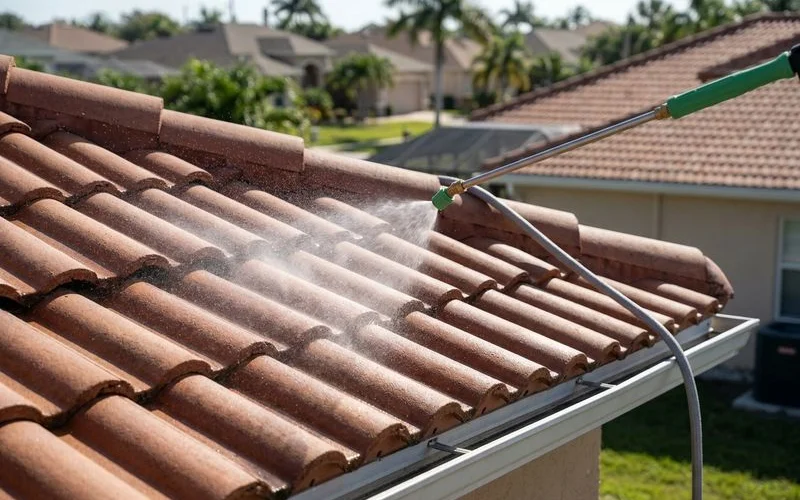
What the roof looked like 48 hours later
Soft washing doesn’t deliver instant cosmetic results the way a high-pressure hit on concrete does. The bacteria are dead within minutes, but the staining lifts as the next rain cycle - or a final rinse - washes the residue off the tile. For most tile roofs in Cape Coral that means a visible improvement within 24 hours and a full result within 48–72 hours, weather depending.
On this roof, the change was easy to see from the kerb:
| Detail | Before | After (48 hrs) |
|---|---|---|
| Vertical black streaks | Continuous from ridge to gutter | Gone - bare tile colour returned |
| Valley algae | Soft green film, slightly slimy | Dry, clean tile |
| Gutter staining | Permanent-looking grey line | Lightened ~90% with final flush |
| Tile damage | None pre-existing | None caused - every tile intact |
The homeowner messaged us four days later: “My neighbour just asked if I replaced the roof.” That’s the right reaction. A soft wash done correctly doesn’t make a roof look new - it makes the existing roof look like itself again, often for another 3–5 years before the streaks return.
Why we’re documenting the job at all
We don’t typically publish individual project write-ups. We’re doing it here because tile roof cleaning is the single most damaged exterior surface we see in Cape Coral - and every damaged tile roof we re-clean was first hit with a pressure washer by someone who didn’t know better.
If you’re shopping a roof cleaning quote, the only question that matters is: “Which method will you use on my roof, and at what PSI?” If the answer is “we’ll pressure wash it,” walk away. If the answer is some version of “we soft wash at low pressure with an EPA-compliant blend,” you’re talking to someone who’ll still be doing this job in 20 years.
That’s how we’ve spent the last two decades - and the next tile roof we clean will be done exactly the same way.
Ready to bring back your tile roof - without risking the warranty? - See our soft wash roof cleaning service